

Health and food · United States
Ranking on 8,041 terms, and cited inside Google’s AI answers
My own site, in the food and health space. Built as an experiment with Mujtaba Rehman, not client work.
- 8,041
- Keywords the site ranked for
- 17,200
- Estimated visits a month
- 2,700
- Visits from its single best term
- 5 of 8
- Top terms cited in the AI answer
Authority is backlinks plus traffic. Authority is what Google’s AI cites. I built this one to find out whether that was actually true.
The numbers
Everything this project produced, in one place.
- 8,041
- Keywords the site ranked for Search positions recorded by Semrush at the point this was captured.
- 17,200
- Estimated visits a month Worked back from the traffic share: its best term drew 2,700 visits and carried 15.69% of the site total. A tool estimate, not analytics.
- 2,700
- Visits a month from one term 12,100 searches a month on that term, at a difficulty of 34.
- 51%
- Of all traffic, from eight terms The eight on screen. The top one alone carried 15.7% of everything the site got.
- 5 of 8
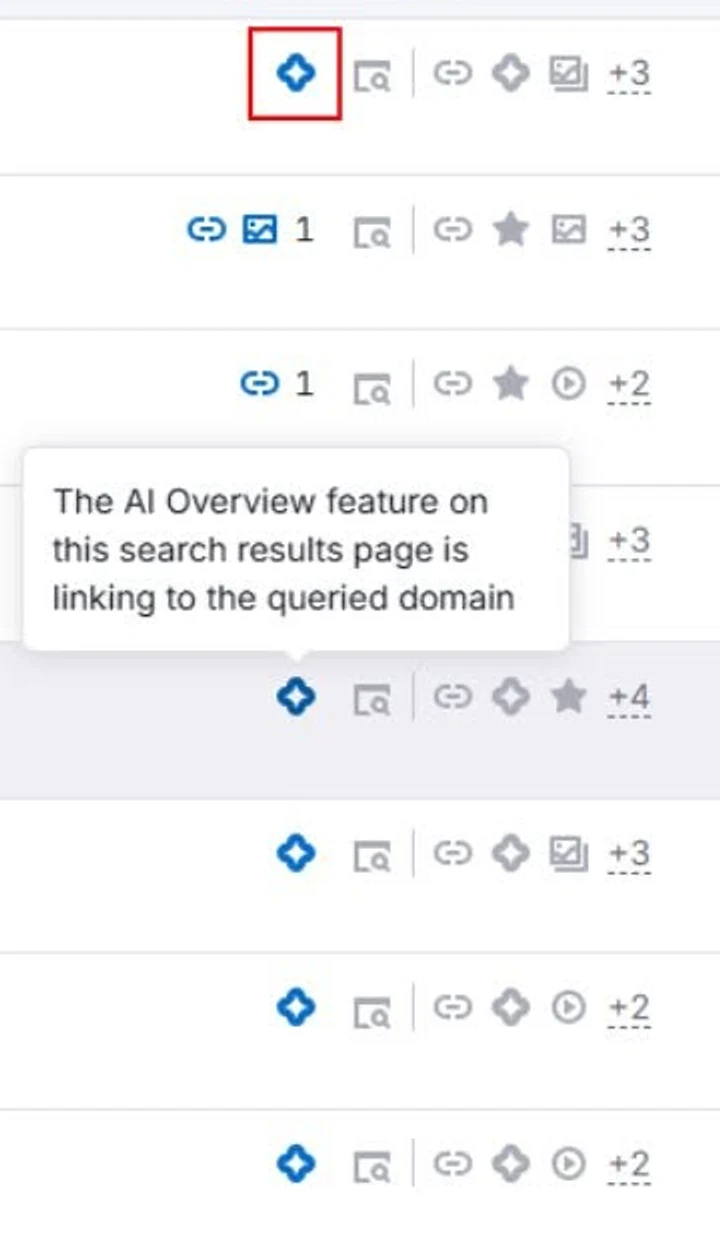
- Top terms cited in the AI answer Five show the AI Overview linking to the site. A sixth is hidden behind the tooltip in the screenshot, so five is the number I can prove.
- 2 of 8
- Top terms sitting at position one Position one is the doorway into the AI answer, which is why it was the target.
Why this one is mine, not a client’s
Client work does not let you test a theory to the end. You are spending someone else’s money, and when something is working you keep doing it rather than pulling it apart to see why.
So this site is mine. Food and health, written for a US audience, built with Mujtaba Rehman to answer one question: what actually gets a site cited inside Google’s AI answers?
Everything below is what we found. The numbers are from Semrush rather than from the site’s own analytics, which matters, and I have said so next to each one.
The part everybody skips
Every time Google ships something new, somebody appears with a trick, and the trick is always presented as a replacement for the fundamentals.
It never is. If a site is not doing core SEO properly, no amount of positioning for AI answers will save it. That was true of the snippet, it was true of the map pack, and it is true here. Nothing below replaces the basics. It sits on top of them.
AI answers do not rank you, they cite you
This is the distinction that changes what you build.
An AI answer is not a ranking. It is a reference, and references work the same way in software as they do in a conversation: you cite whoever is taken to be the authority. So the question stops being how do I rank for this, and becomes what makes a site look like an authority to Google.
My answer, and the thing we set out to test: authority is backlinks plus traffic, and the traffic has to be real relative to what the niche can produce. Not one or the other. Both.
Position one is the doorway
The other half of it is more mechanical.
When AI Overviews arrived they largely took over the ground the featured snippet held. Same job, different presentation. Which meant the pages that had been winning the snippet were mostly the pages the AI started citing, and the way you win a snippet is by owning the top of the page.
So the target was never “get into AI answers.” The target was position zero and position one on the terms that mattered, on the understanding that the citation follows.
What it looked like when it worked
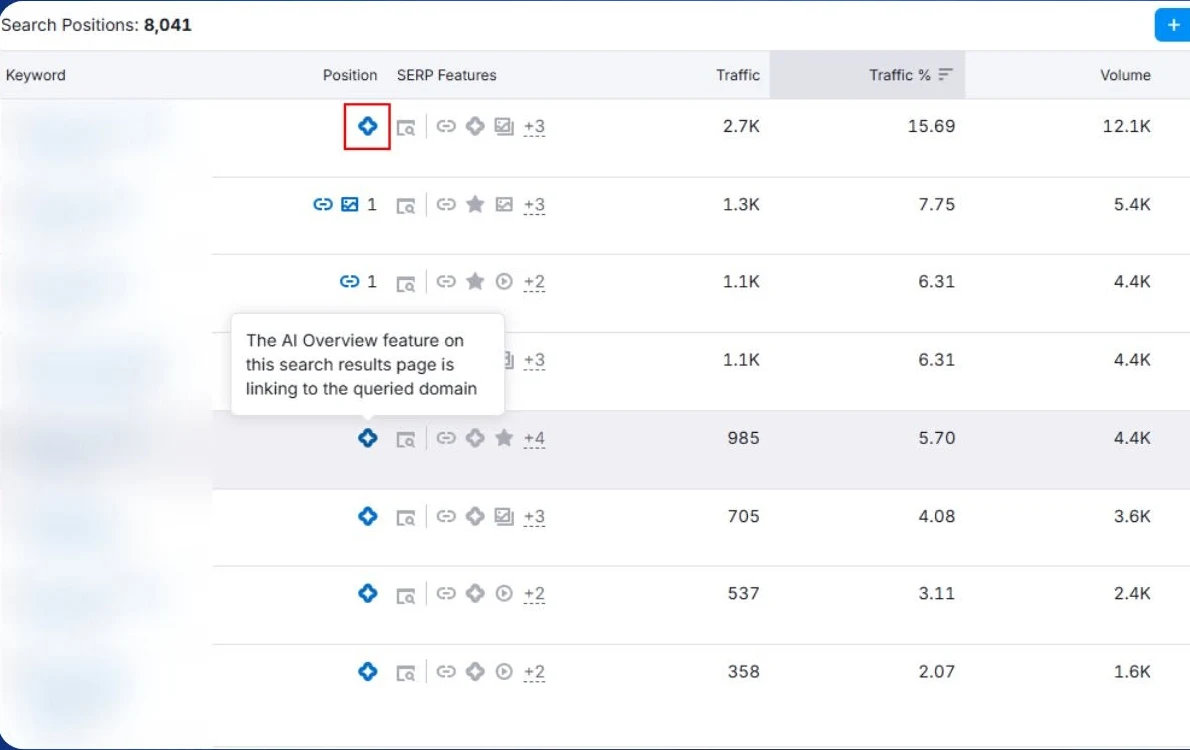
8,041 keywords with a position. The strongest of them brought around 2,700 visits a month on its own, from a term with 12,100 monthly searches and a difficulty of 34, and carried 15.69% of everything the site earned. The eight terms on that screen together carried 51% of it. Work the share backwards and the site was drawing roughly 17,200 visits a month.
Two of those eight sat at position one. And on five of them, Google’s AI answer was linking to the site.
What actually earned it
Backlinks, and the kind matters more than the count.
Real sites in the niche linking in because a page was worth linking to. People sharing pages without being asked. Enough traffic that the engagement was not a rounding error. And, best of all, a direct competitor linking to us.
That last one sounds absurd until you look at it from Google’s side. A competitor has every reason not to link to you. When one does anyway, it is the hardest signal in the set to fake, and it is worth more than a stack of ordinary links.
Put those together and you stop needing to think about a list of two hundred ranking factors. The site becomes the one Google favors in that niche, and everything gets easier.
And then it stopped
The site does not hold those positions today.
I am including that because a case study that ends at the good screenshot is not telling you how any of this works. Being the site Google favors in a niche is not a status you are granted. It is a position somebody else is trying to take, and eventually somebody did.
That is the honest shape of search, and it is why I do not sell rankings as a destination. The work that got a site cited is the work that keeps it cited, and the month you stop is the month the clock starts running against you.
Why this sits on a page about local businesses
Because the signals are the same ones, at a different scale.
A plumber is not competing for 12,100 searches a month, and does not need 8,041 keywords. But a local business wins on exactly the same logic: cover what people are actually searching for, be the obvious answer rather than one of ten, and give Google reasons to treat you as the authority in your city. That is the whole method, and this site is where I proved to myself that it holds.
Read the write-up on my profile
This project ran on SEO and Content Marketing. Nobody was paying for this one, so there were no calls to count. On client work, results are measured the way the guarantee defines them: calls, leads, and booked work.
Want numbers like these in your own market?
Book a free consultation. I will show you what is standing between your business and the calls, and what it would take to get there.